Chicago winters are not gentle. Lake effect snow, icy mornings, wind that cuts through everything and stretches of subzero cold put real strain on a car. The vehicles that struggle most are rarely the ones that face the worst weather. They are the ones that went into winter with a small problem nobody had looked at, whether that was an aging battery, tired wiper blades, worn tires or a belt that was ready to give out. This guide is a simple checklist for getting your car ready before the snow and the deep cold arrive. It covers the battery and wipers in detail, since they cause so many winter headaches, and then walks through tires, brakes, fluids, lights and an emergency kit. It also covers warning signs that mean you should stop driving and how a mobile mechanic in Chicago can handle much of this at your home or workplace.
Why Winter Is So Hard on a Car
Cold air changes how almost every part of a car works. The battery has to deliver more power to start a cold engine while its own ability to produce power drops. Oil and other fluids get thicker. Rubber stiffens. Tire pressure falls. Add snow, slush, ice and road salt, and every weak spot gets a real test. The best approach is to find those weak spots on a mild fall day in your driveway, instead of on a frozen roadside during a storm.
Step One: The Battery
If you only have time for one winter check, make it the battery. It is the most common reason a car will not start on a cold morning, and it often fails with little warning.
Warning signs
- Slow cranking. The engine turns over more slowly than usual before it starts.
- A clicking sound when you turn the key or press the start button.
- Dim headlights or interior lights, especially when you start the car.
- A battery or charging warning light on the dashboard.
- Corrosion on the terminals, which looks like white, blue or green crust.
- Age. A battery that has been in the car for several years is more likely to fail, and cold weather is often what exposes it.
What to do
- Have it tested. A technician can test both the battery and the charging system in a few minutes, and the result tells you whether the battery is healthy or near the end of its life.
- Clean and tighten the connections. Loose or dirty terminals can cause the same symptoms as a weak battery.
- Replace it early if it is weak. Replacing a tired battery on your own schedule beats getting stuck in a parking lot in the cold.
- Carry a jump starter or jumper cables. A charged jump starter does not need another car.
- Park in a garage when you can, since a sheltered car often starts more easily.
Follow your owner’s manual for anything involving the battery, since some vehicles have special procedures for disconnecting or replacing one.
Step Two: Wipers and Washer Fluid
Visibility is a safety issue, and winter makes it harder. Snow, slush, road salt spray and freezing rain can blind a windshield in seconds.
- Replace tired blades. If they streak, skip, chatter or leave water behind, or if the rubber is cracked or torn, replace them. Some drivers choose winter blades, which are built to resist ice buildup.
- Use cold weather washer fluid. Summer fluid or plain water can freeze. Fill the reservoir with a fluid made for low temperatures, and keep an extra bottle in the trunk.
- Check the spray nozzles. Make sure they are not clogged and that they aim at the glass.
- Test the defroster and the heater. You need to be able to clear the windshield quickly.
- Inspect the glass. Chips and cracks can spread in the cold.
- Keep an ice scraper and a snow brush in the car. Never use the wipers to break ice off the glass.
If your owner’s manual allows it, lifting the wipers off the windshield before a freezing night can keep them from sticking to the glass. Check the manual first, since some vehicles have wipers that are not designed to be lifted.
Step Three: Tires
- Pressure. Cold air lowers tire pressure, so check all four tires, plus the spare, when they are cold. Use the pressure on the door jamb sticker or in your owner’s manual, and not the number on the tire sidewall.
- Tread. Look at the wear bars in the grooves, or use a tread depth gauge. Worn tires lose grip fast on snow and ice.
- Condition. Look for cuts, bulges, cracks and uneven wear.
- Type. All season tires and dedicated winter tires behave differently in snow and cold. Your owner’s manual and a tire professional can help you choose.
Step Four: Brakes
Snow and ice make stopping harder, so your brakes need to be in good shape. Watch for squealing, grinding, a soft pedal, pulling to one side, vibration when stopping and a brake warning light. Brakes are a safety system, so repairs belong with a qualified technician. If the pedal ever feels wrong while you are driving, slow down safely, pull over when you can and do not keep driving as usual.
Step Five: Fluids, Belts and Hoses
- Coolant. It protects the engine from freezing and overheating. Check the level and condition, and use the type your manufacturer specifies.
- Engine oil. Make sure the level is right and that you are not overdue for service.
- Brake fluid and power steering fluid. Look at the reservoirs and follow your owner’s manual.
- Belts and hoses. Cold stiffens rubber. Look for cracks, fraying and soft spots. A squeal on a cold start can mean a belt needs attention, as explained in our post on the signs your serpentine belt is going bad.
- Leaks. Look under the car for fresh spots after it has been parked.
Step Six: Lights and Visibility
Winter days are short and storms reduce visibility further. Test your headlights, high beams, brake lights, turn signals and hazard lights, and clean the lenses. Before you drive, clear all snow and ice from the lights, mirrors, windows and roof, since snow that slides off the roof can block your view or hit the car behind you.
Step Seven: Pack an Emergency Kit
- Warm blankets, gloves, hats and a coat for everyone in the car.
- A flashlight with fresh batteries, or a headlamp.
- A phone charger or power bank.
- Water and snacks that will not spoil in the cold.
- An ice scraper and a snow brush.
- A small shovel.
- Traction material, such as sand or cat litter, to help a stuck tire grip.
- Jumper cables or a jump starter.
- Extra washer fluid.
- Reflective triangles or flares, and a first aid kit.
For more of the common questions about getting a car ready for the cold, our car winterization FAQ is a helpful companion to this checklist.
Habits for Lake Effect Snow and Deep Cold
- Keep the fuel tank at least half full. It gives you a buffer if you get stuck and need the heater.
- Slow down, and leave extra distance. Snow and ice need much more room to stop.
- Brake early and gently, and avoid sudden steering or acceleration.
- Be careful on bridges, overpasses and shaded spots, which tend to freeze first.
- Wash off road salt from time to time, including the underbody if you can.
- Check the forecast and road conditions before longer trips, and tell someone your route.
- Stay home when you can. If conditions are severe, the safest choice is often to wait.
If You Get Stuck or Break Down
- Get as far off the road as you safely can, and turn on your hazard lights.
- Stay with the car if conditions are dangerous. It gives you shelter and makes you easier to find.
- Call for help. Use roadside assistance, a mobile mechanic or emergency services if you are in danger.
- Stay warm. Use blankets and layers. If you run the engine for heat, do it in short periods, keep the exhaust pipe clear of snow and crack a window slightly, since a blocked pipe can let dangerous fumes into the cabin.
- Never run the engine in a closed garage.
Stop Driving If You Notice
- A brake warning light, a soft pedal or brakes that stop responding normally.
- Steam, a temperature warning or a burning smell.
- An oil pressure warning light.
- A flashing check engine light.
- Steering that suddenly feels loose or heavy.
- Any smell of exhaust fumes inside the cabin.
Pull over in a safe place as soon as you can and get help instead of pushing on. Your owner’s manual explains what each warning light means for your vehicle.
How a Mobile Mechanic Can Help
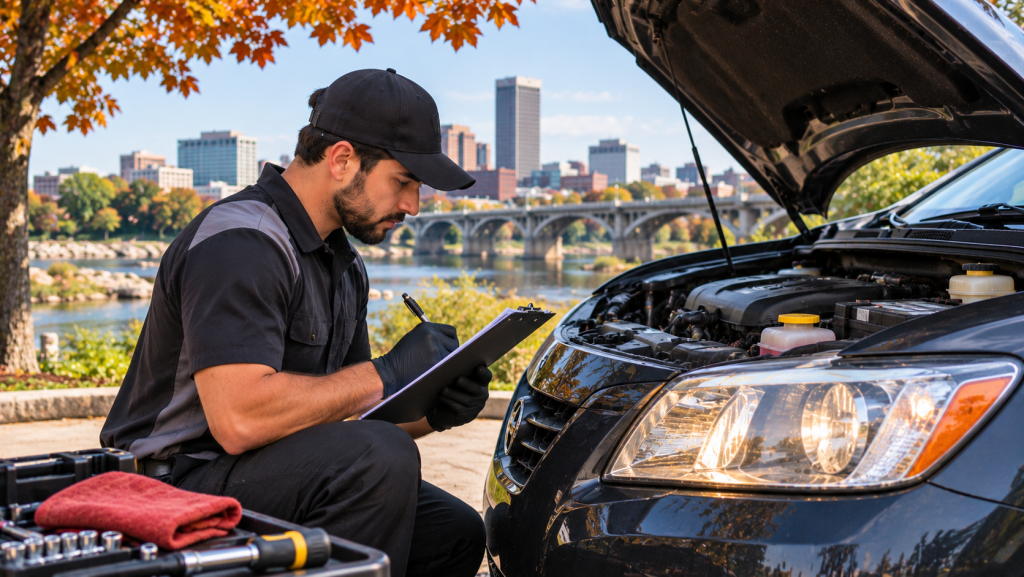
A mobile mechanic can come to your home or workplace in Chicago and go through the most important winter checks where your car is parked. That can include a battery and charging system test, replacing wiper blades, a look at the tires, brakes, lights, fluids, belts and hoses and small repairs. It is much easier than finding a free afternoon in the middle of the busiest season for repair shops. Some jobs, such as tire mounting and balancing, alignment and larger brake or suspension repairs, may need a shop with specialized equipment, and a good technician will tell you honestly which jobs those are.
Quick Winter Checklist
- Test the battery, clean the terminals and replace a weak battery early.
- Replace worn wipers, use cold weather washer fluid and test the defroster.
- Check tire pressure, tread and condition, including the spare.
- Check the brakes for noise, pedal feel and warnings.
- Check coolant, oil and other fluids, and look for leaks.
- Inspect belts and hoses.
- Test every light and clear snow and ice before you drive.
- Pack a winter kit and keep the tank at least half full.
A little preparation now makes the coldest mornings much easier. If you would like help getting your car ready, visit the Mobile Mechanics of Chicago homepage to learn more, or contact us to schedule a visit before the snow flies.