
If your car has started making a new noise or acting strangely and you suspect the serpentine belt, you are probably right to be paying attention. This single belt powers your alternator, power steering, air conditioning, and often your water pump, which means when it starts failing, the symptoms tend to show up across several systems at once rather than just one isolated issue. Here is exactly what to look and listen for.
Squealing Or Chirping Noises
A high pitched squealing sound, especially one that happens right when you start the engine or when you turn the steering wheel sharply, is one of the most common early signs of a belt going bad. This noise usually means the belt has lost some of its grip on the pulleys it wraps around, often from age related hardening or a tensioner that is no longer applying proper pressure.
A chirping sound that comes and goes, particularly noticeable on cold Chicago mornings or after driving through rain or slush, points toward a similar issue, sometimes made worse by moisture temporarily reducing the belt’s grip even further. If this chirping seems to disappear once the engine warms up, that is still worth having checked, since it typically means the underlying wear is there even if the symptom is not constant.
Visible Cracking
Pull back the belt slightly, or look closely at the ribbed underside where you can access it, and check for small cracks running across the ribs. A few superficial cracks on an older belt are common and not always an immediate emergency, but numerous deep cracks, or cracks that run all the way through a rib, indicate a belt that has lost significant structural integrity and could fail without much additional warning.
Fraying
Frayed edges, where the belt material looks worn, stringy, or is visibly coming apart along one or both sides, is a more advanced sign of wear than simple cracking. A fraying belt is losing material progressively, which affects how evenly it can grip the pulleys, and this kind of damage tends to progress toward complete failure faster than cracking alone does.
Glazing
A belt that has overheated or slipped repeatedly can develop a glazed appearance, a smooth, shiny surface instead of the normal matte, slightly textured rubber finish. Glazing reduces the belt’s grip on the pulleys significantly, often causing the squealing noise described earlier, and a glazed belt should generally be replaced even if it has not yet developed visible cracks or fraying, since the surface damage itself compromises how well the belt can do its job.
Battery Warning Light
Since the serpentine belt drives your alternator, a belt that is slipping or has broken entirely can prevent the alternator from charging your battery properly, triggering a battery or charging system warning light on your dashboard. If this light appears alongside any of the noises or visible wear signs already described, it is a strong indication the belt itself, rather than the battery, is the actual source of the problem. If you have already experienced a starting failure connected to this kind of charging issue, our guide on the top 10 reasons your car won’t start and how to get back on the road covers a range of causes worth ruling out alongside a belt inspection.
Overheating
In vehicles where the serpentine belt also drives the water pump, a slipping or broken belt directly affects your cooling system’s ability to circulate coolant. A temperature gauge that climbs unexpectedly, particularly if it happens alongside a squealing noise or other belt symptoms, suggests the belt may already be slipping badly enough to reduce water pump performance, and this combination should not be ignored, since continued driving under these conditions risks serious engine damage.
Loss Of Accessories
Power steering that suddenly feels heavier than normal, an air conditioning system that stops blowing cold air, or accessories that seem to lose power intermittently can all indicate a belt that is slipping enough to reduce how effectively it drives these components. Since a single serpentine belt typically powers all of these systems together, losing more than one of them around the same time is a particularly strong signal that the belt itself, rather than each individual component, is the actual problem.
Why Ignoring These Signs Leads To Bigger Problems
A serpentine belt rarely fails completely without first showing some combination of these warning signs, but drivers often dismiss an early squeal or a slightly heavier steering feel as a minor annoyance rather than recognizing it as a developing belt problem. Continuing to drive on a failing belt allows the wear to progress, increasing the risk of a sudden, complete failure rather than a gradual decline you might otherwise have time to address on your own schedule. Chicago’s winter conditions add another layer to this risk, since cold temperatures make rubber more brittle and potholes can jar components loose or knock a marginal tensioner further out of alignment, both of which can accelerate a belt’s decline from showing early symptoms to failing outright.
When To Stop Driving And Have The Vehicle Inspected
A single mild squeal on a cold start that disappears once the engine warms up is generally safe to monitor for a few days while you arrange an inspection, though it should not be ignored indefinitely. However, several signs mean you should stop driving and have the vehicle inspected promptly rather than continuing on your normal routine. A belt that is visibly fraying or missing sections of material, a temperature gauge that is climbing alongside belt related noise, a complete and sudden loss of power steering, or multiple accessories failing simultaneously all indicate a belt that could fail completely at any moment, potentially leaving you stranded or, in the case of overheating, risking serious engine damage.
Why A Mobile Mechanic Fits This Situation Well
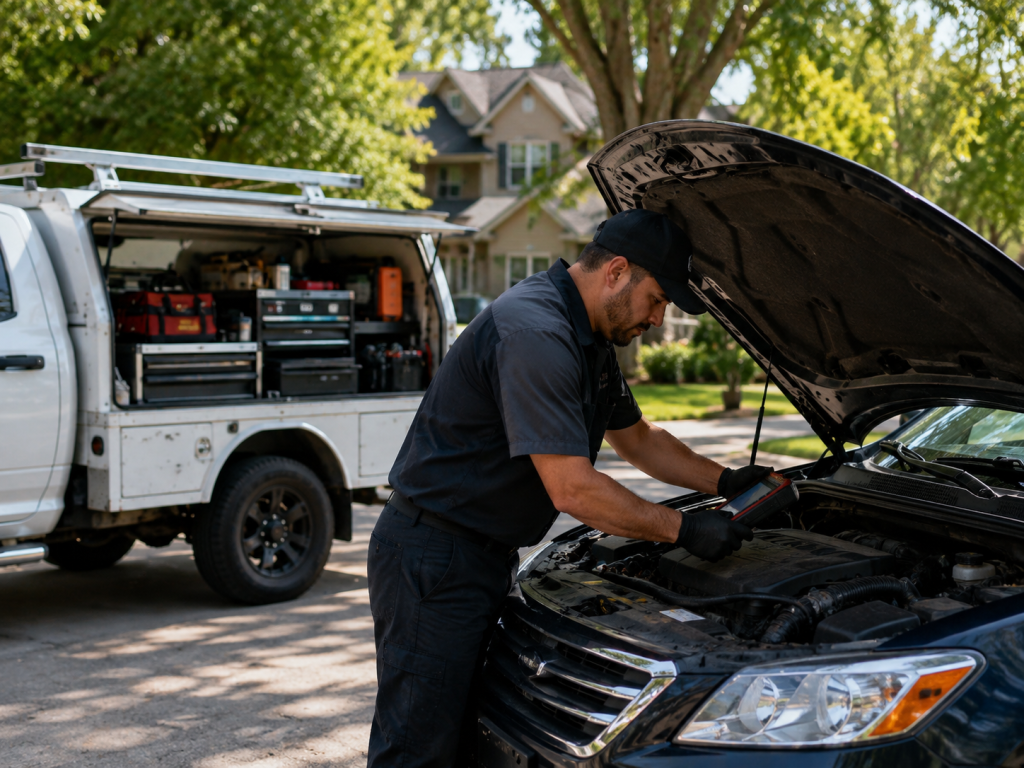
If you are noticing these symptoms and are not confident about driving the vehicle to a shop, having a technician come to you removes that uncertainty entirely. A mobile mechanic can inspect the belt, tensioner, and related pulleys right where your car is parked, and often replace the belt on the spot if it is found to be the cause, without requiring you to risk a breakdown on the way to a shop appointment.
We covered the broader advantages of this approach in our article on why mobile mechanics are better than traditional auto shops in Chicago, which explains how convenience and quick response times come together, particularly useful when you suspect a belt problem but are not sure how much longer it is safe to keep driving.
Do Not Wait For A Complete Failure
Recognizing these signs early, squealing or chirping, visible cracking, fraying, glazing, a battery warning light, overheating, or accessories that suddenly stop working, gives you the chance to address a serpentine belt problem before it turns into a roadside breakdown.
If you have noticed any of these symptoms, visit our homepage to learn more about our services, or reach out through our contact us page to schedule a visit at your home or office anywhere in the Chicago area.
Catching a failing belt early is one of the simplest ways to avoid a much bigger problem down the road.